Reduce Restaurant Menu Printing Costs
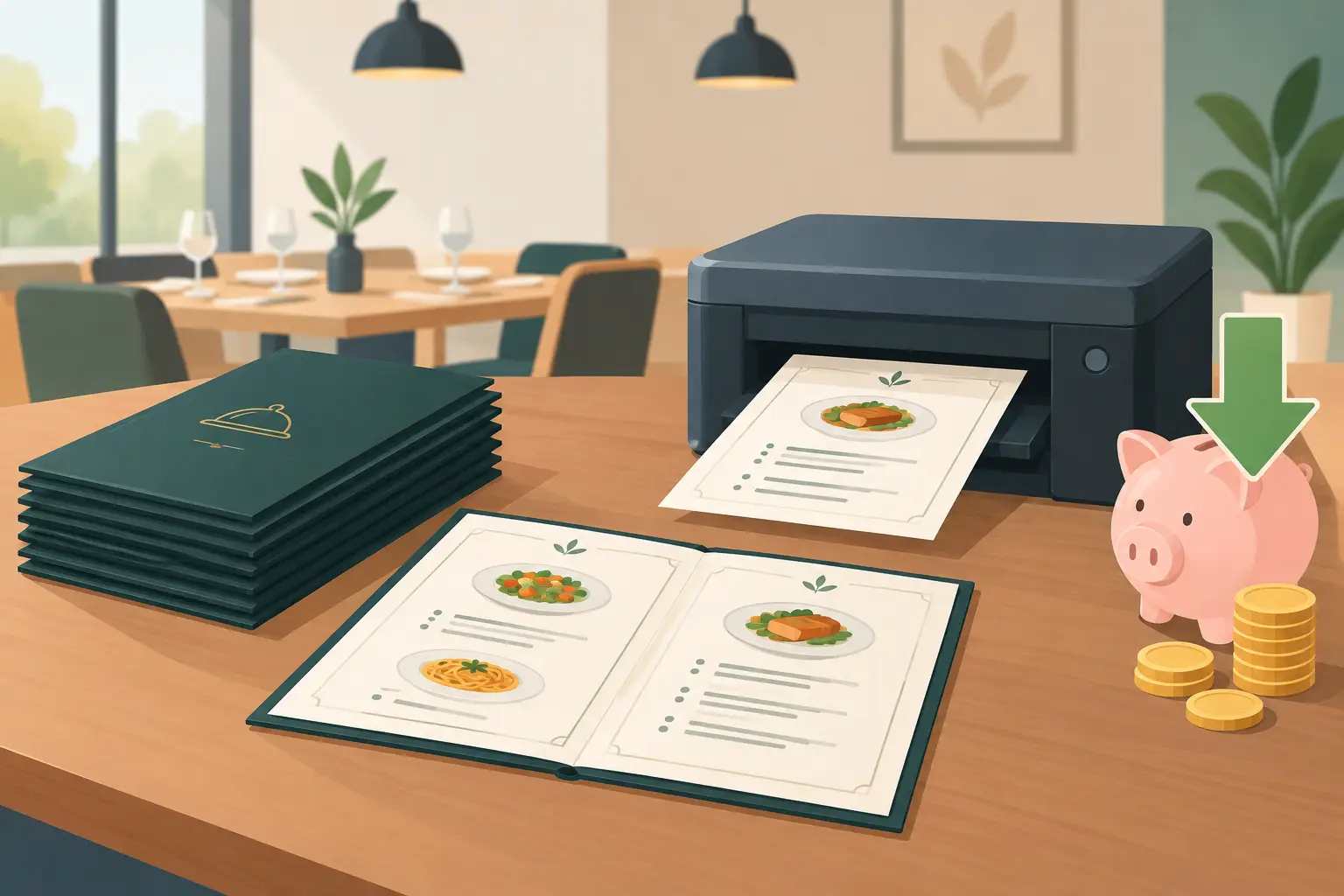
The cost of paper might seem like a small detail, but every price change, seasonal offer, or dish availability update triggers a new expense. For restaurants, cafes, bars, and hotels, reducing menu printing costs isn't just about cheaper printing. It's about updating your offerings when your business demands it, not when new copies arrive from the printer.
Especially in tourist areas, where assortment, prices, and languages change faster than in a typical city establishment, a printed menu quickly becomes outdated. A single change can require revising dozens or hundreds of copies. When this repeats several times during a season, the cost is no longer small.
Where the Real Cost of a Printed Menu Lies
The cost isn't just the design and printing price. There's file preparation, proofreading, delivery, the time employees spend inserting new pages into covers, and old material that can no longer be used. If an establishment has a menu in multiple languages, different drink lists, breakfast, daily specials, and a seasonal menu, the number of versions quickly multiplies.
Printed menus also create indirect costs. A waiter might inform a guest that a specific dish is unavailable, but the guest has already seen it on the menu and might have chosen your establishment precisely for that reason. If prices on the table differ from prices on the bill, an unpleasant situation arises that affects trust, even when the error occurred due to urgent changes in purchasing prices.
In practice, the biggest problem isn't one large print run, but the constant need for small corrections. You've changed the price of coffee, removed a cocktail no longer offered, added a non-alcoholic drink, or prepared a daily special. With paper, every such change has a cost and a deadline.
Reducing Menu Printing Costs Starts with a Process Change
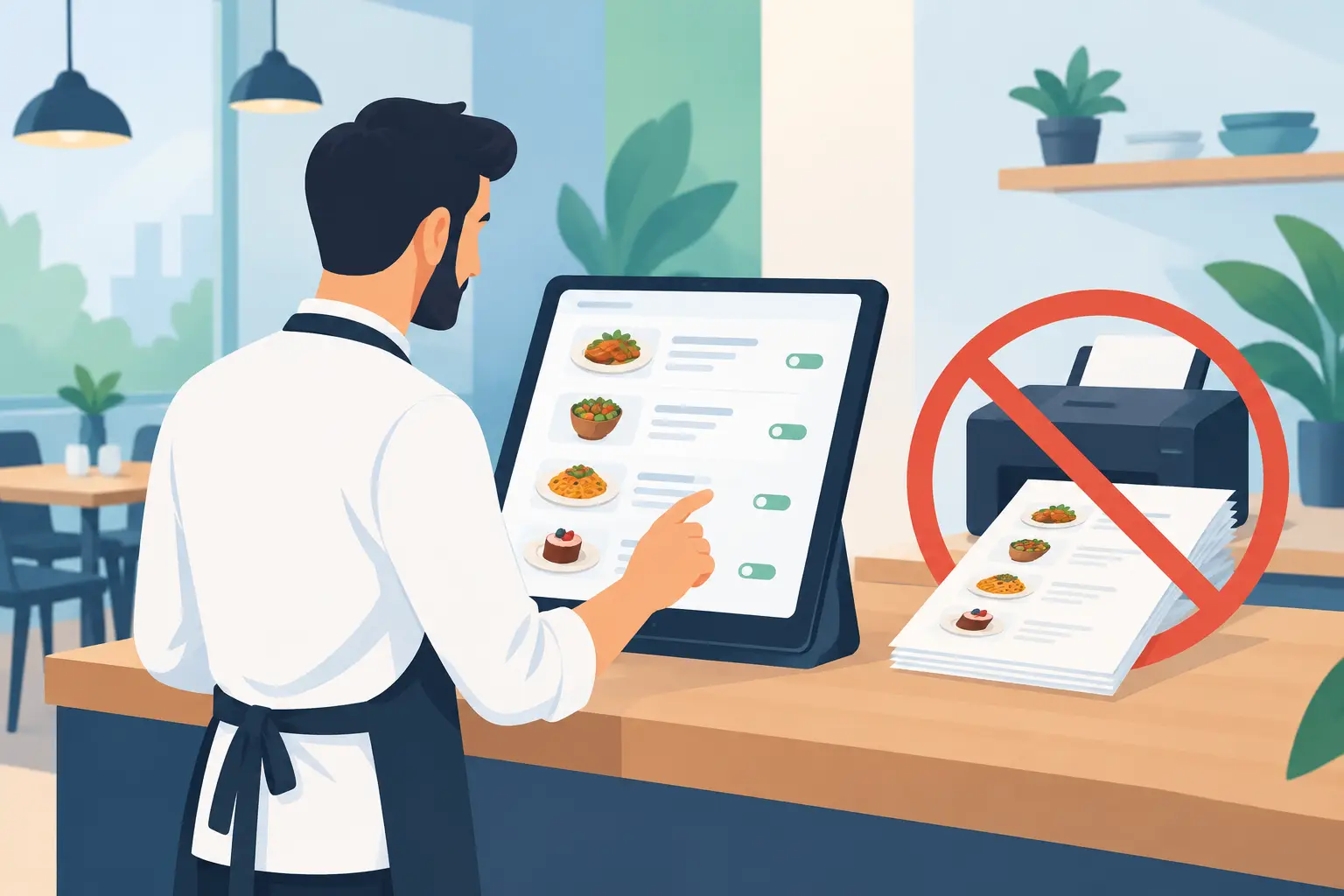
The most effective change isn't finding the cheapest printer, but reducing the number of situations where printing needs to be repeated at all. A digital menu allows content to be changed in one place, and the guest immediately sees the current version on their phone.
This changes daily operations. When a certain wine runs out, the item can be temporarily hidden. When the kitchen introduces a new dish, the description, price, and photo can be added without delay. When happy hour ends, the promotion is removed immediately, without crossing out prices, placing stickers over existing material, or verbal explanations from staff.
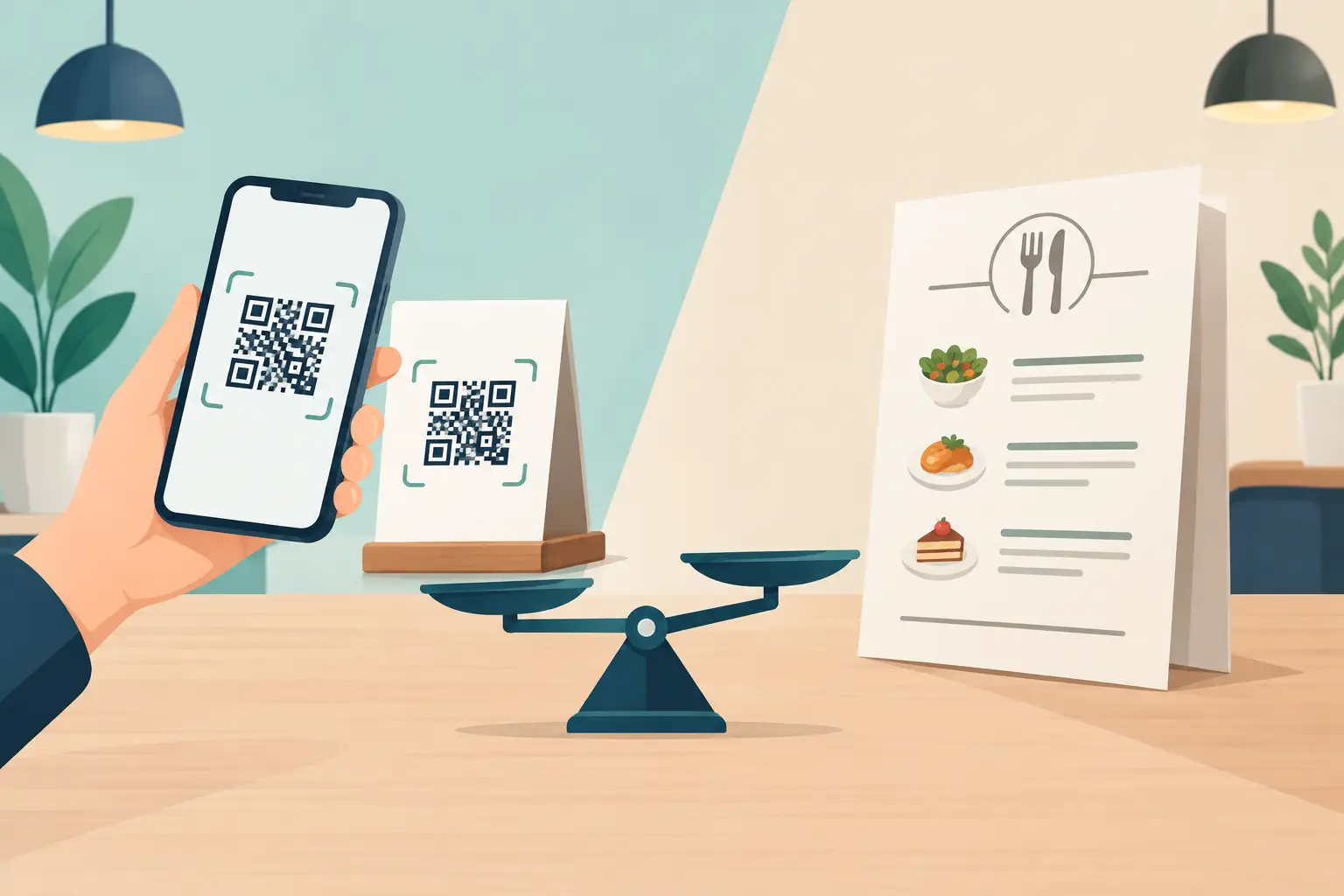
A QR code on the table, bar, or bill leads the guest directly to the menu. For the establishment, this means fewer physical copies, less wear and tear, and less administration. For the guest, it means quicker access to the offerings, without waiting for a waiter to bring a menu when it's busy.
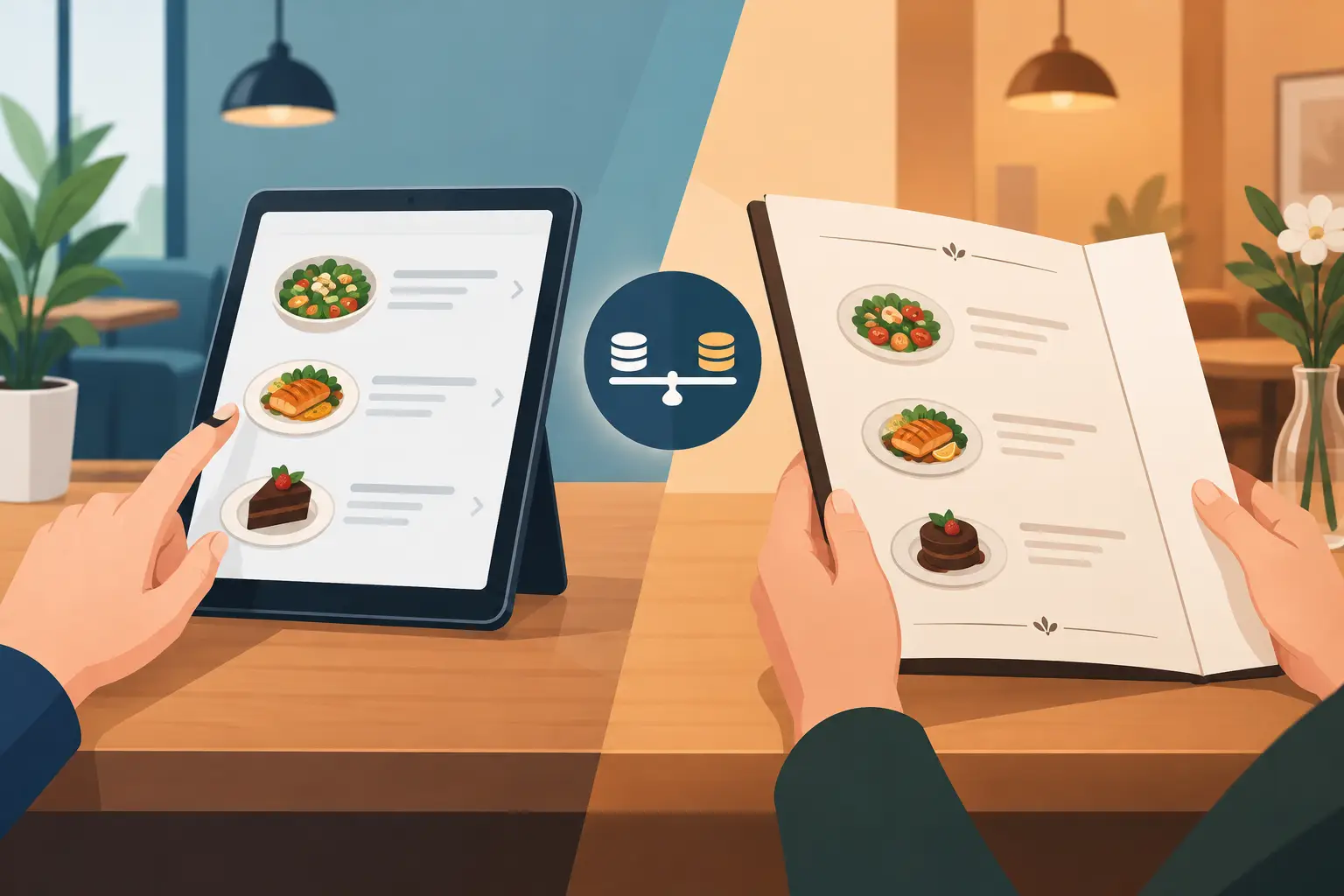
A digital option doesn't mean paper disappears overnight. Some restaurants want a few high-quality printed menus for guests who request them, for special occasions, or as part of a premium ambiance. This is a reasonable approach. The difference is that the printed menu is no longer the sole source of information or material that you must massively change for every correction.
Up-to-Date Prices Protect Both Margins and Guest Experience
In hospitality, prices often change due to procurement, exchange rates, seasonality, or new costs. If you delay changes because a new print run isn't cost-effective, your establishment risks selling items with a lower margin than planned. For some products, this might be justifiable for a short time, but it shouldn't become a constant practice.
A digital menu allows prices to reflect the real business situation. The same applies to portions, side dishes, allergens, and ingredients. If a recipe changes, the information can be updated immediately. This is helpful for the guest, but also for the team that wants to give accurate answers without extra checks in the kitchen.
A clear and up-to-date offering reduces the number of questions at the table. Waiters can then dedicate more time to recommending wine, suggesting desserts, or better organizing service, instead of explaining what on the menu is currently unavailable.
More Languages Without More Printed Versions
For establishments on the coast, in tourist centers, and large cities, multilingualism isn't an addition but a standard necessity. Printing menus in Serbian, English, German, Russian, or other languages increases volume, cost, and the potential for error.
In a digital menu, the guest chooses the language that suits them. Your team maintains one offering, while translations are displayed according to the guest's choice. Of course, the translation should be accurate and adapted to hospitality. A poor automatic translation can confuse a guest as much as an outdated paper menu. That's why it's important that dish names, ingredients, and allergens are checked before publication.
Don't Skimp on Information Guests Actually Use
Reducing printing doesn't mean the menu should be poorer. On the contrary, the digital format provides space for information often omitted on paper because it takes up too much room. A dish photo, a short description, labels for vegetarian and vegan options, allergens, spiciness, or house recommendations can help guests decide more easily.
However, a simple rule applies here: the display must remain clear. Too many photos, long descriptions, and dozens of labels can slow down the selection process. Guests want to quickly find what interests them. Well-structured categories, readable prices, and consistent names are more important than visual effects.
The menu should work equally well on a smaller phone and a larger screen. If a guest has to zoom in on text, scroll for a long time, or search for a price, the advantage of the digital format is lost. That's why the solution is chosen according to the actual operation of the establishment, not according to the number of options it offers.
How to Estimate the Savings
Before deciding, look at the last 12 months. Add up how much you spent on design, proofreading, printing, lamination, covers, and replacing damaged copies. Then note how many times you changed a price, removed an item, or introduced a seasonal offer.
Don't forget employee time. If a manager sends every change to a designer, waits for confirmation, checks a proof, and distributes new menus, that's an operational cost rarely seen on a printing bill. When content is updated directly in a digital system, the entire process can be much shorter.
Savings depend on the type of establishment. A small cafe with a stable offering won't see the same return as a restaurant with an extensive menu, a hotel with multiple service zones, or a beach bar that changes its offerings daily. But almost every establishment gains greater control over the information it presents to guests.
A Digital Menu as a Daily Tool
A good digital solution isn't just a PDF placed behind a QR code. PDFs are often difficult to read on a phone, especially when created for A4 format. A true mobile menu should guide guests through categories, clearly display prices, and allow for easy content maintenance.
menu4.me is designed precisely for this need: for a hospitality establishment to have a professional, easily accessible menu that can keep up with changes in offerings without a new print run. This is especially practical when the season speeds up, when offerings change daily, or when the same establishment serves both local and international guests.
Before transitioning, prepare your content. Check names, prices, weights, allergens, and translations. Determine who on the team has the right to change the menu and implement a short review routine before publishing. These small habits prevent errors and maintain consistency.
Ultimately, guests don't think about your printing costs. They want to see what you offer, how much it costs, and if it suits them, all within a few seconds. When you enable this clearly and accurately, you reduce unnecessary expenses while simultaneously giving the impression of an establishment that keeps things under control.