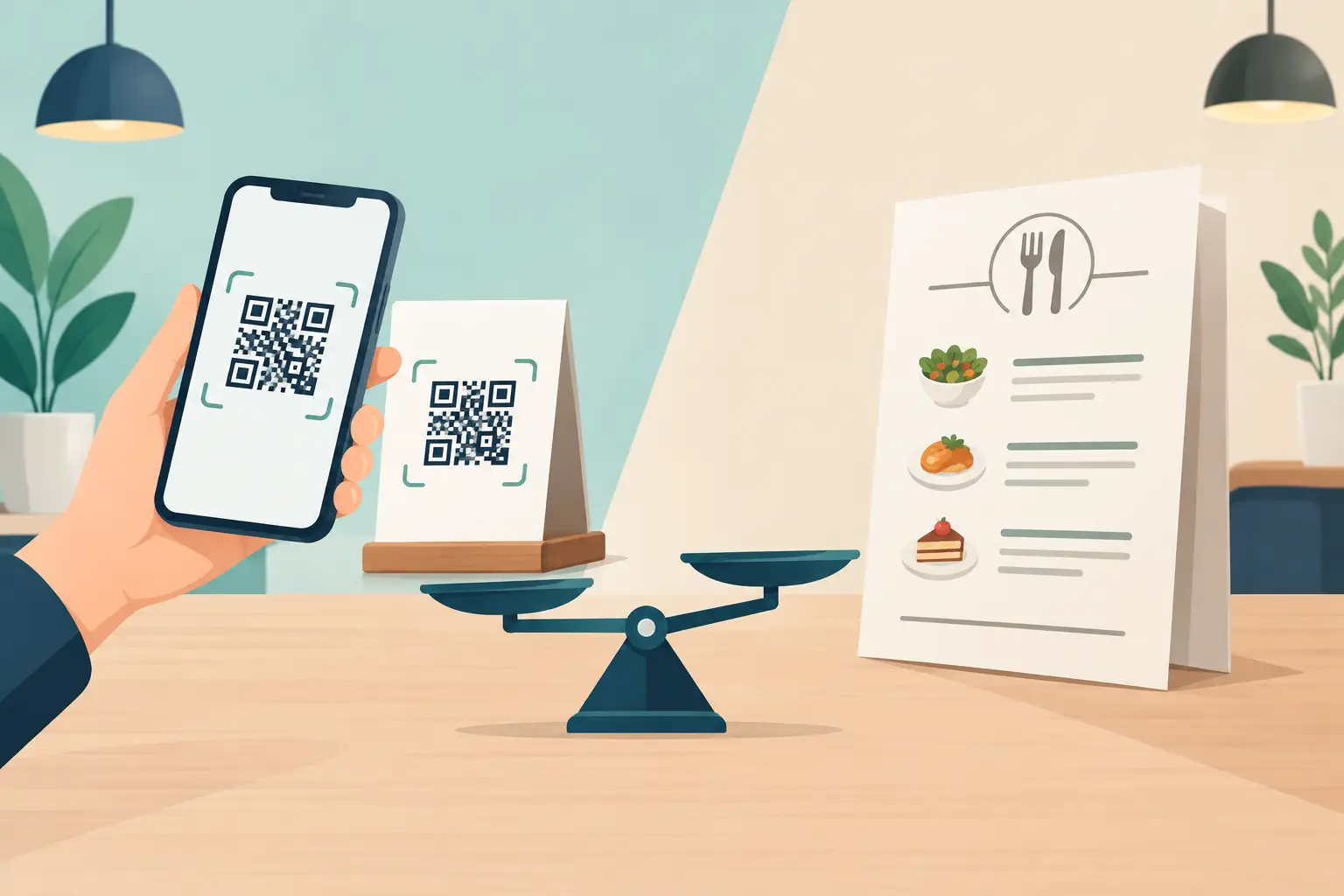
Digital vs. printed menu: Which is better for your restaurant?
A guest just sat down on your patio, and the waiter brings them a menu with an old cocktail price, a dish that's no longer available, and descriptions only in English. During peak season, when offers and prices change weekly, the question of digital menu vs. printed isn't about aesthetics; it's about control over your daily operations.
The printed menu is a familiar format, and many guests still expect it. However, its production cost isn't just the price of paper and printing. It includes edits, additions, repeated proofreading, waiting for delivery, and situations where staff must explain that what's written on the menu is no longer valid. A digital menu solves precisely this operational challenge: the information guests see can be up-to-date the moment you change it.
For a restaurant, café, bar, or hotel in the US and beyond, the right choice depends on the type of establishment, the frequency of menu changes, and your guest profile. Most often, the best solution isn't a blind rejection of the printed menu, but a decision based on where your time and money are currently going.
Digital Menu vs. Printed: The Speed Difference
With a printed menu, every change involves multiple steps. You need to agree on the new price or description, prepare the file, send it to print, wait for production, and replace existing copies. If you're changing just one item, the process is the same as changing the entire menu. For establishments with a stable offering, this might not be critical. For a seasonal restaurant, beach bar, or a place with daily specials, it quickly becomes an unnecessary expense.
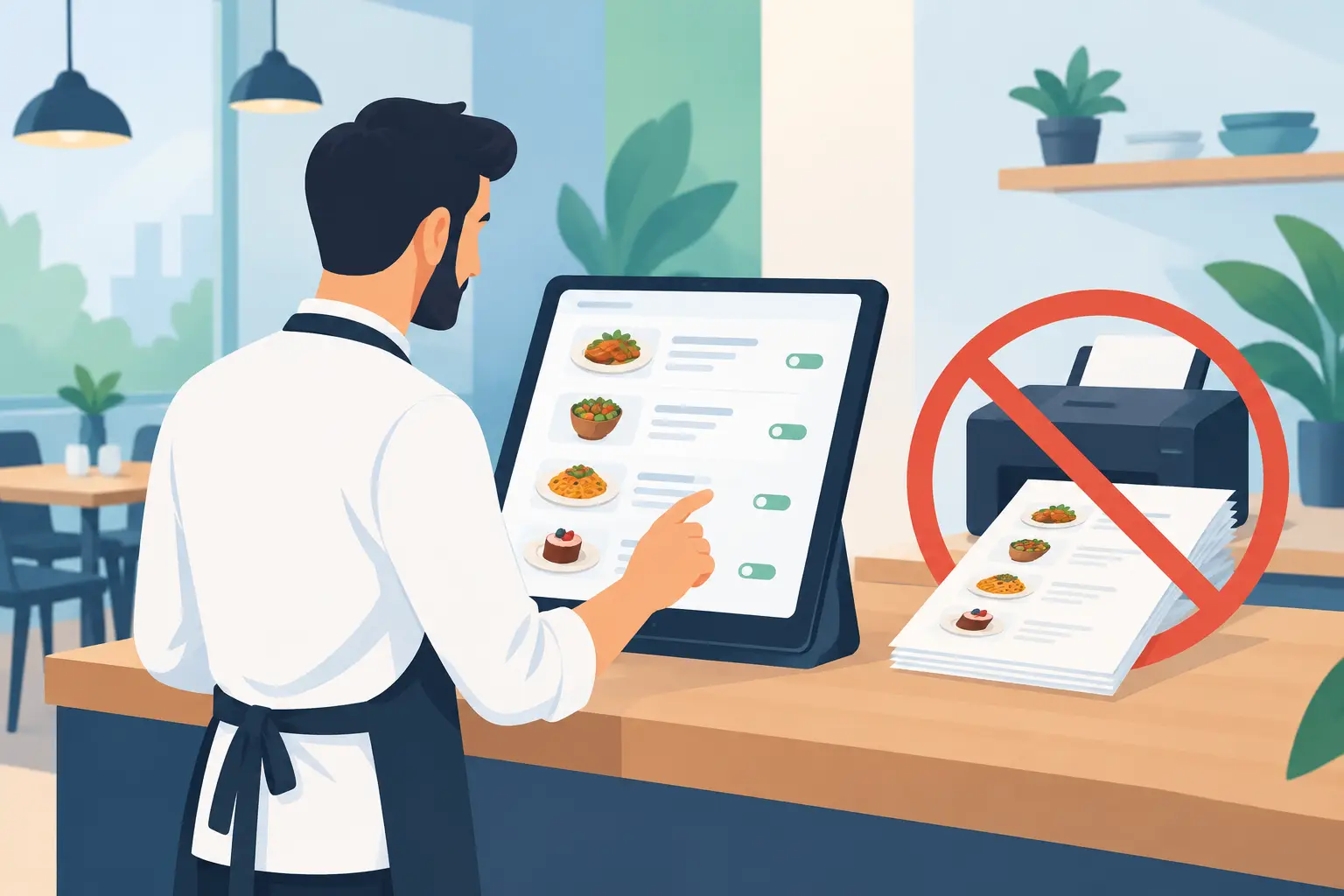
A digital menu changes this logic. Price, photo, ingredients, allergen labels, availability, or translation can be updated without collecting old menus from tables. When a specific wine runs out, the item can be hidden. When the kitchen introduces a daily special, it can be added immediately. Guests therefore see an offering that reflects the actual situation in your establishment, and staff receive fewer questions and encounter fewer awkward situations.
This speed is particularly useful during tourist season. Procurement prices change, guest numbers increase, and the menu often needs to reflect what arrived from suppliers that morning. In such conditions, waiting for new print runs is not a practical solution.
Printing Cost Isn't Just the Price of One Menu
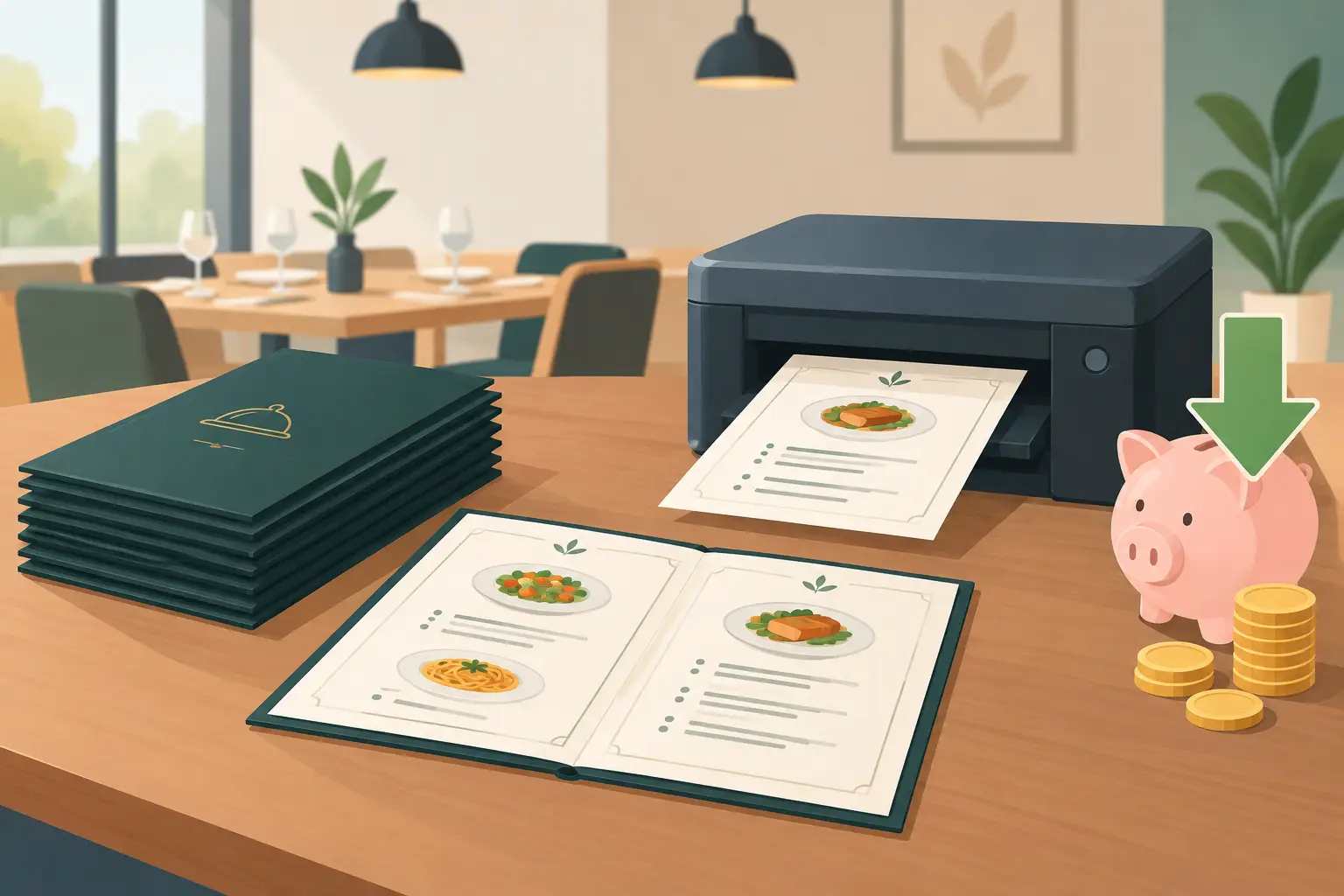
At first glance, a printed menu might seem like a one-time investment. However, you need to factor in design, preparation, printing, lamination or covers, replacing damaged copies, and every subsequent correction. If you have multiple zones in your venue, multilingual versions, or separate drink lists, the number of copies further increases.
A digital menu doesn't incur the cost of reprinting with every change. This doesn't mean it's entirely without cost – you need to set up quality content, photos, and menu structure – but maintenance is simpler and more predictable. Instead of paying for every change, you invest in a system that allows you to manage information yourself.
It's also important to consider the cost of error. An incorrect price in a printed menu can remain on tables for days or weeks. If staff charges one price and the guest sees another, the consequence isn't just a smaller bill. It's also a poorer impression, additional explanations, and potential arguments at the end of the visit.
Guest Experience Depends on How the Menu is Made
A QR code itself doesn't create good service. If a guest scans a code and opens a slow, cluttered page with tiny font, a digital menu becomes an obstacle. A good digital menu must be readable on a phone, logically divided by categories, and fast enough for guests to find what they're looking for in seconds.
Here, the digital format has an advantage that paper can hardly match. You can add photos of the most popular dishes, clear descriptions, labels for vegetarian and vegan options, allergens, spice levels, or wine recommendations. For international guests, multiple languages are not a luxury but part of basic service. They shouldn't have to guess ingredients or wait for a waiter just to understand the offering.
However, guest habits shouldn't be ignored. A portion of the audience, especially in more formal restaurants or hotels, likes to hold a menu in their hands. For older guests, a phone might not be the first choice. Therefore, it's often reasonable to have a few neat printed copies available upon request, while the digital menu serves as the main and always up-to-date source of information.
When a Printed Menu Still Makes Sense
A printed menu isn't obsolete on its own. It has a place in establishments with a small, rarely changing selection and a clear concept. A fine dining restaurant with a tasting menu, a small local spot with five permanent products, or a hotel wanting a special wine list in covers might have good reason to keep paper.
Paper can also contribute to the atmosphere if it's part of the space's identity. Quality material, good typography, and a carefully designed layout can enhance a premium impression. But this effect only exists as long as the information is accurate. A beautiful menu with crossed-out prices or unavailable items quickly loses its value.
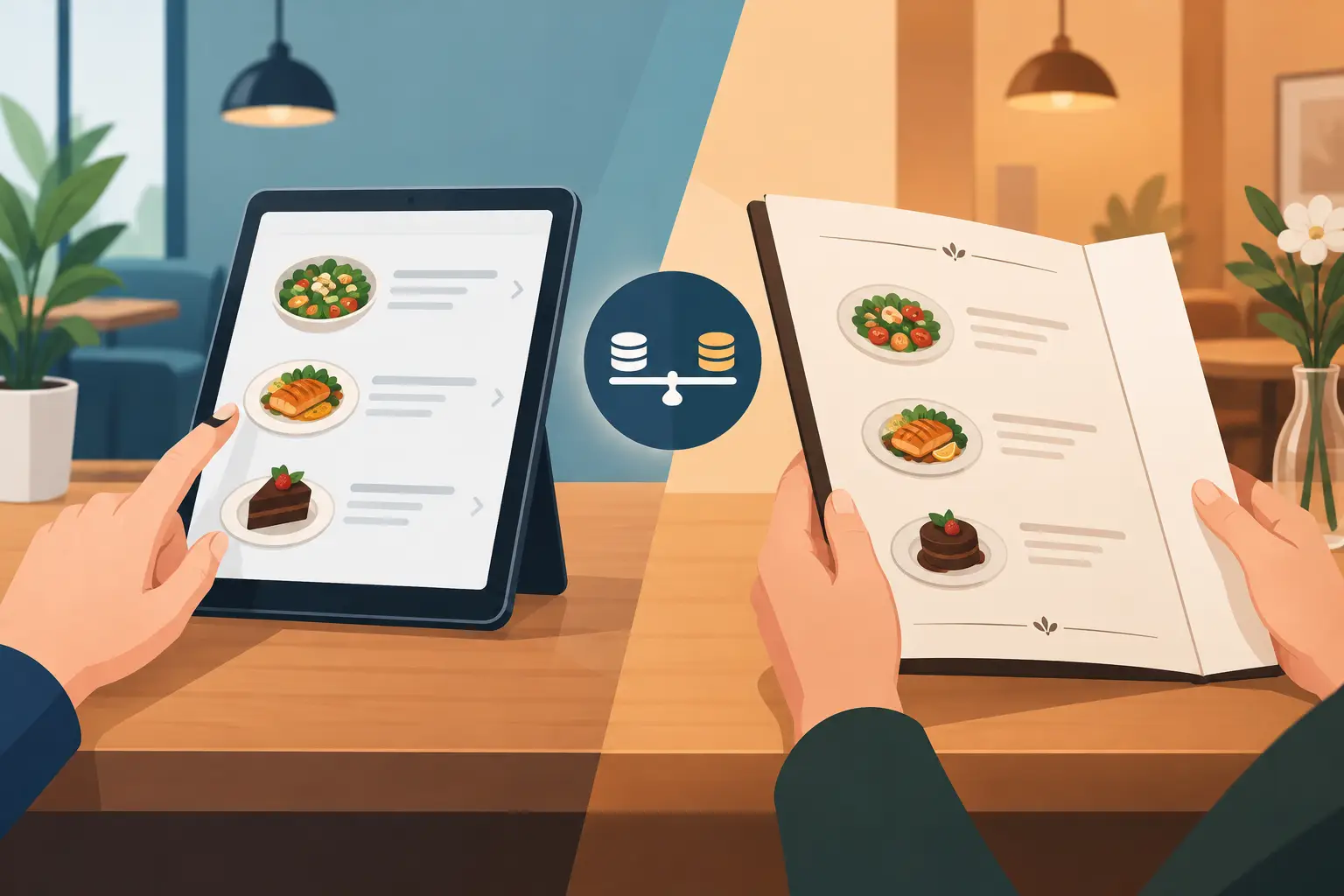
The most practical approach for many establishments is a combination: a printed menu for a special experience or as a backup option, and a digital menu for daily accuracy, details, and multilingual offerings. You don't have to choose between tradition and functionality when each has a clearly defined role.
How a Digital Menu Changes Team Operations
A good menu decision isn't just about the guest. It affects the kitchen, bar, waitstaff, and management. When the menu changes quickly, staff must remember what's currently unavailable, what price applies, and what's new on offer. This creates room for error, especially during busy periods.
A digital menu reduces this pressure because guests see current information before ordering. The waiter still plays a vital role – to recommend, answer questions, and manage service – but doesn't have to compensate for the shortcomings of outdated materials. This is particularly significant in venues that work with seasonal staff or have frequent shifts.
For managers, consistency is also an advantage. The same price, description, and language are displayed to every guest. There's no menu version left in storage, on the patio, or in the wrong folder. Platforms like menu4.me allow your digital offering to remain tied to a specific venue and be managed without a complex technical process.
How to Make a Decision for Your Venue
Start with three practical questions. How many times a year do you change prices or your offerings? How many languages do you need? How much time do staff spend explaining items that aren't clearly presented on the menu? If the answers are "often," "more than one," and "too much," a digital menu likely has a clear business advantage.
Then, check the guest experience from their perspective. Scan the QR code with your own phone, sit at a table in the sun, try to find a coffee, a non-alcoholic drink, and a gluten-free dish. If you don't find answers quickly, the content needs to be simplified. Categories should be clear, prices visible, and descriptions concise and useful.
Finally, don't view a digital menu as a table decoration. It's an operational tool. Its value increases when you update it regularly, when it reflects the actual offering, and when it saves the guest time instead of adding another step.
The best menu is one that guests understand effortlessly, and your team can change without delay. If printing can't keep up today, it's time to relegate paper to the role it performs best – a special detail, not the main source of information.