Update Menu Prices Without Printing and Waiting
A guest is sitting at a table, the waiter brings the bill, and the price on the bill is not the same as the one the guest saw on the menu. Such a situation can spoil the impression, lead to unpleasant explanations, and create doubt about the service. Therefore, updating menu prices is not an administrative detail that can wait until the end of the season. It is part of daily business control.
For restaurants, cafes, bars, and hotels in Serbia and the region, prices change for several reasons: purchase prices increase, seasonal offers come and go, a supplier might not have a specific product, or you want to activate a promotion. The problem arises when the change in the system, at the cash register, and in the printed menu does not happen on the same day. Then the staff has to remember exceptions, and the guest receives different information depending on whom they ask.
Why Menu Price Updates Must Be Fast
A printed menu seems simple as long as the offer is stable. However, as soon as the price of a few items changes, the owner has a choice between two bad options: printing a new batch of menus or temporarily operating with outdated prices. The first option wastes time and money, while the second directly impacts guest trust and billing accuracy.
In high-traffic establishments, the consequences are immediately visible. Waiters receive verbal instructions, the kitchen prepares items that may no longer be available, and the manager checks if everyone has memorized the new price. When such changes are repeated, administration begins to take up time that should be dedicated to the guest, shift operations, and service quality.
Fast updates do not mean prices should be changed without a plan. On the contrary, it allows decisions to be implemented precisely. If a price is adjusted, the guest should see it immediately. If a product is sold out, it should be removed from the offer or clearly marked. If a promotion is running, it should be visible when it starts and when it ends.
How to Organize Menu Price Updates
A good process starts with one rule: every price should have a single place where it is edited. When information is simultaneously changed in spreadsheets, messages, printed menus, and on social media, the possibility of error increases. The person responsible for the price might change it in one place but miss another.
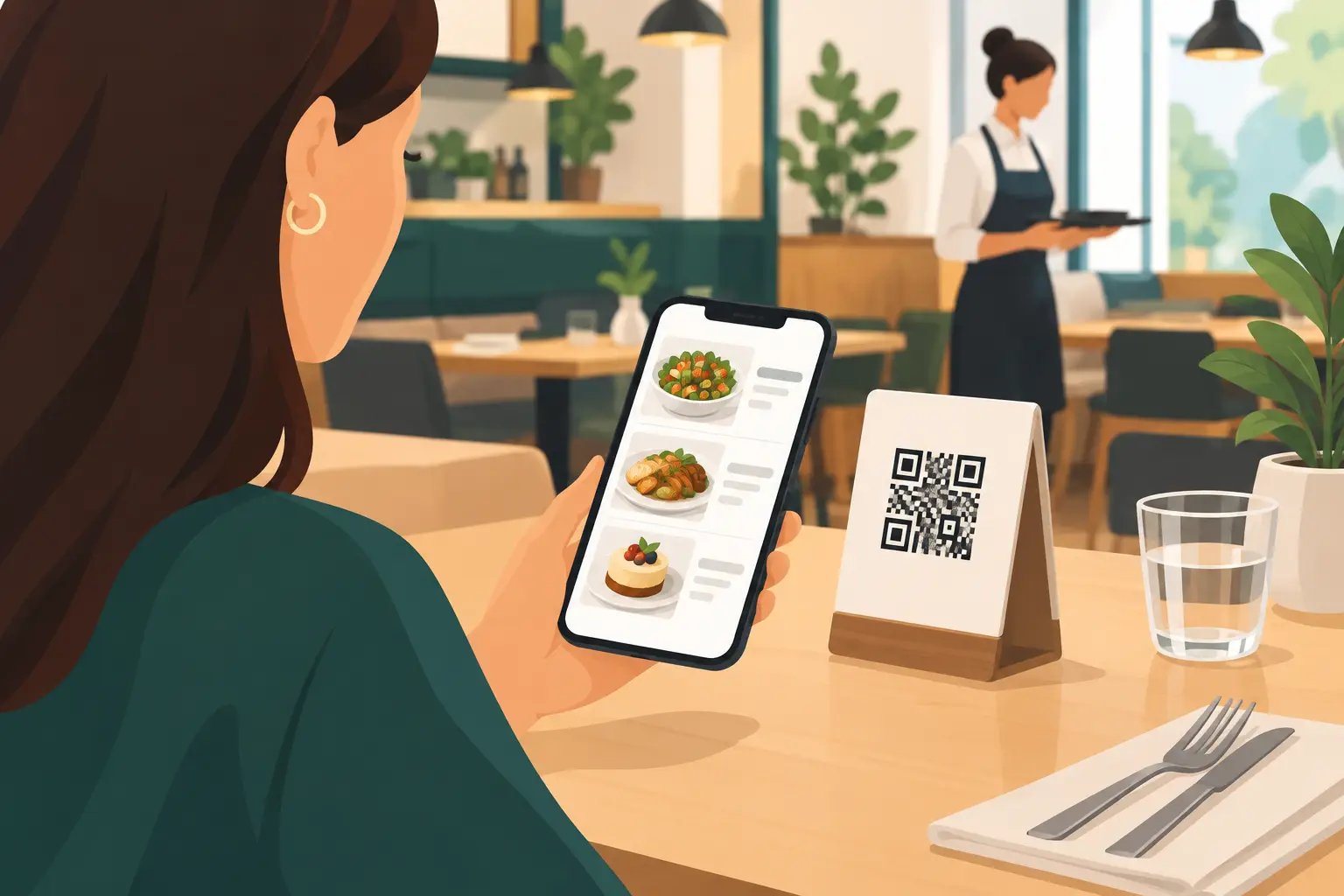
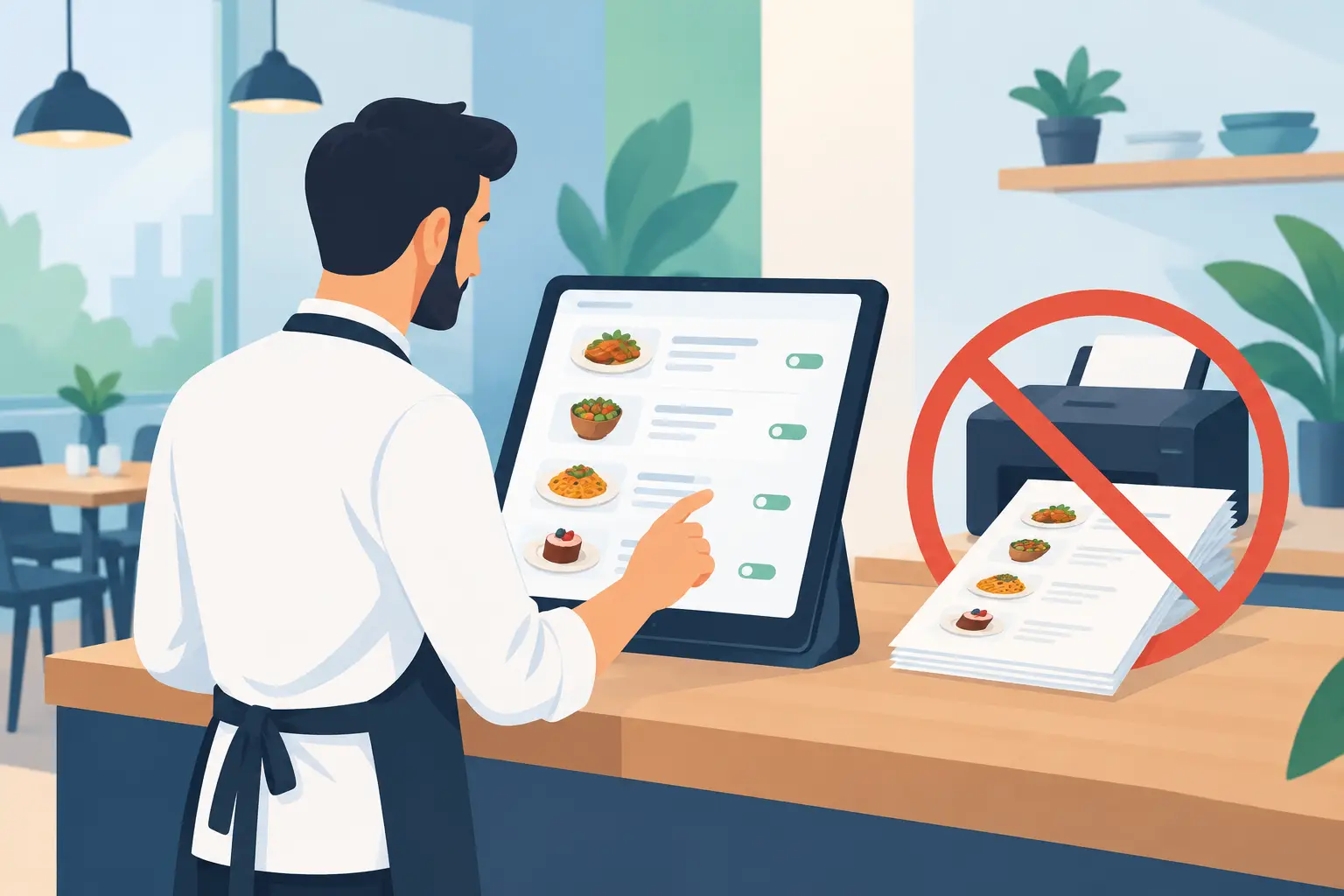
A digital menu solves this operational problem by placing the price list where the guest actually uses it – on their phone. A manager or authorized team member can modify the price, description, availability, or category, and the change is immediately available after scanning the QR code. No collecting old menus, sticking on new prices, or waiting for printing.
Determine Who Changes the Data
In a smaller cafe, this could be the owner or the shift manager. In a restaurant or hotel with multiple departments, it makes sense for one person to input changes, while another verifies that the price matches the fiscal system and internal price list. There's no need to create a complicated procedure, but responsibility should be clear.
It is most practical to enter changes before the start of a shift or immediately upon confirmation of a new purchase price. If it's an urgent change, for example, the unavailability of a certain wine or fish, a digital menu allows the item to be quickly hidden. This prevents staff from having to give the unpleasant answer that the guest just ordered something unavailable.
Check the Entire Path to the Guest
The price on the menu is not the only figure to control. Check if the same price is set at the cash register, in delivery channels, on promotional materials, and on the bar menu, if you have one. A digital menu reduces the number of physical versions but does not automatically resolve every internal discrepancy.
Before publishing a change, open the menu as a guest. Look at the category, item name, price, photo if available, and description. This brief check is especially useful when you have multiple languages. An incorrect currency, an old price in the English version, or an unclear translation can create the same problem as an outdated printed menu.
A Digital Menu Is More Than Just a Paper Replacement
The biggest advantage of a digital menu isn't just saving on printing. That's important, especially when prices are adjusted frequently, but the real value is real-time offer control. You can introduce a daily special, a seasonal cocktail, or a breakfast that's only valid until a certain hour without preparing new cards for the tables.
This is particularly useful for establishments in tourist locations. During the summer, the offer changes faster, procurement can vary, and guests come from different countries. A multi-language menu makes selection easier for the guest, while giving staff confidence that everyone sees the same current information. Instead of explaining the difference between two versions of the price list, the team can focus on recommendations and service.
menu4.me is designed precisely for such daily practice: to provide a restaurant or cafe with a mobile menu that is easy for guests and simple for the team to modify. The QR code on the table leads to the specific establishment's offer, and changes do not depend on new printing or replacing every paper card.
When Not Just the Price Needs Changing
Sometimes a price correction is a sign that the entire item should be reviewed. If the price increase is significant, a clearer description of the portion, ingredients, or preparation method can help the guest. For premium drinks and wines, it is useful to state the volume, vintage, or origin when relevant. Transparency doesn't mean cluttering the menu with details, but rather providing enough information for the guest to understand what they are ordering.
Also, not every change in purchase price should automatically be passed on to the guest. This depends on the margin, item turnover, competition, seasonal timing, and the product's position in the offer. Sometimes it's better to adjust the price of an add-on, side dish, or premium variant than to change the best-selling item. A digital menu provides speed of implementation, but the decision still needs to be commercially well-thought-out.
When the price changes, also check how it is displayed. A crossed-out old price makes sense for a limited-time promotion, but it's not a good solution for a regular price increase. A clear, current price is the fairest to the guest and the easiest for the staff.
Seasonal Changes Without Chaos in the Dining Room
Season often brings the greatest pressure. Summer gardens, hotel breakfasts, beach bars, and restaurants with daily catches operate with offerings that change much faster than off-season. In such conditions, a paper menu quickly becomes a limitation, especially if only a few items need to be changed daily.
A practical solution is to prepare categories for seasonal offers in advance. When the time comes, you activate them, add the price and availability, and at the end of the season, you remove them from the visible menu. This way, you don't create a new menu from scratch, but rather manage the existing structure.
The same applies to daily promotions. Lunch offers, happy hour, or breakfast can be clearly separated from the regular offering. The guest immediately sees what is active, and the staff doesn't have to explain the rules of every promotion at every table.
Price Accuracy Builds Trust
A guest might not notice how quickly your team updated the menu. They will notice something more important: that the information is accurate, the selection is clear, and the bill matches what they saw before ordering. This is an experience that seems simple precisely because it is well-organized.
Updating menu prices should be a quick routine, not a project you delay until enough changes accumulate for new printing. When the menu is available digitally and the team has a clear process, changes become a normal part of operations. This leaves more time for what guests come for – good food, fast service, and a pleasant table.