Hotel Digital Menu Simplifies Service
A late-arriving guest, an early-breakfasting family, and a foreign tourist wanting dinner in their native language don't all look for the same thing. That's why a hotel menu cannot be just a beautifully printed document on the table or in the room. It must keep pace with the hotel's rhythm, the kitchen's offerings, and guest expectations throughout the day.
For a hotel, the menu is simultaneously a sales tool, part of the service, and an operational document. If it's outdated, unclear, or only available in one language, the consequences are quickly visible: staff answer the same questions, guests hesitate when choosing, and the kitchen receives orders for items that are no longer available. A digital approach resolves many of these daily bottlenecks without complicating team operations.
What a Hotel Menu Should Achieve
Hotel offerings are rarely simple. Breakfast, restaurant, bar, room service, pool, conference breaks, and seasonal promotions can all have different prices, operating hours, and item selections. A single static menu struggles to keep up with such dynamics, especially when changes occur during the day.
A good hotel menu should immediately answer several practical questions for the guest: what is currently available, how much it costs, when it can be ordered, and what the dish contains. For international guests, the answer must be understandable without additional explanations at the reception or from a waiter.
At the same time, a hotel manager needs a system that allows for quick changes without ordering new printed menus. The price of fish, the availability of a dessert, or the daily special should not depend on when the printing company can deliver a new version.
Where Printed Menus Often Cause Problems
A printed menu can still have a place in certain hotels, especially when it's part of a carefully crafted premium experience. However, as the sole source of information, it often becomes a limitation. This is particularly evident during peak season, when prices and availability change more frequently than it's realistic to print new versions.
The first problem is accuracy. A crossed-out price or a sticker over old information leaves an unprofessional impression. The second is language. A hotel hosting guests from multiple countries often needs to prepare several versions of the same menu, leading to easy discrepancies in translations, prices, or descriptions.
The third problem is availability by location. A guest in their room wants a room service menu, a guest by the pool wants the bar's offerings, and a guest in the restaurant expects a complete food and wine list. If staff constantly bring the appropriate versions, service becomes slower than it should be.
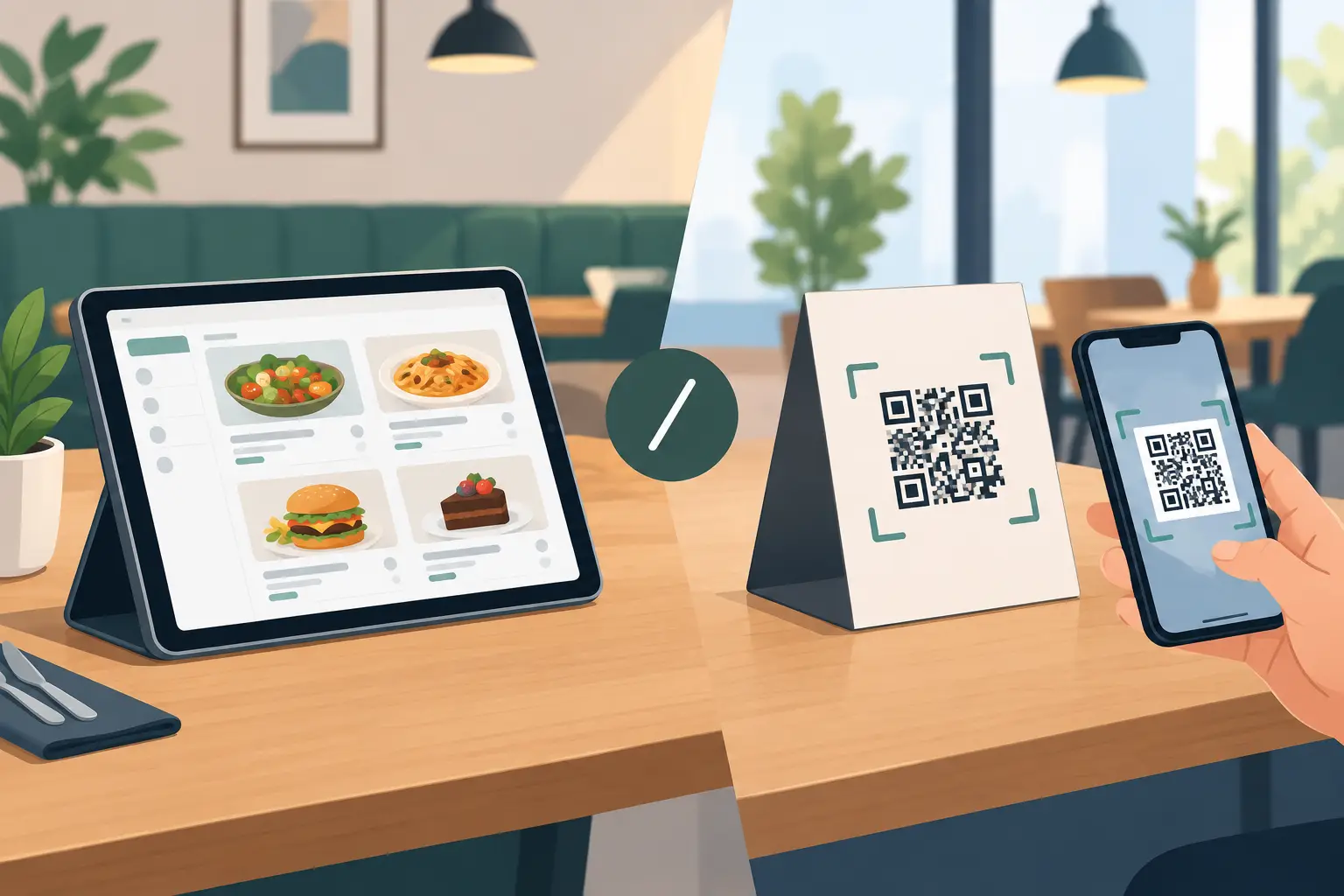
A digital menu doesn't mean a hotel has to remove every piece of paper from the table. It means that key information can be accurate, accessible, and easily changeable where the guest needs it. In practice, a QR code on the table, in the room, by the sun loungers, or at the reception can lead to an offer tailored specifically to that service point.
Digital Hotel Menu by Hotel Area
The best solution isn't necessarily one long page with every dish the hotel offers. A guest shouldn't have to browse banquet offerings while choosing a cocktail by the pool. Menu organization should follow the actual guest experience.
Restaurant and Breakfast
The restaurant menu should clearly separate breakfast, lunch, dinner, daily specials, and the wine list. For breakfast, it's useful to display serving times, buffet information, and options for guests with special dietary needs. If breakfast is served until a certain time, that information must be immediately visible, not hidden in the hotel description.
For an à la carte restaurant, high-quality photos can help sales, but don't overdo it. One good photo accompanying a category or a selected special is often enough. Too many visuals slow down browsing, especially on a weaker mobile network or for a guest who wants to order quickly.
Room Service
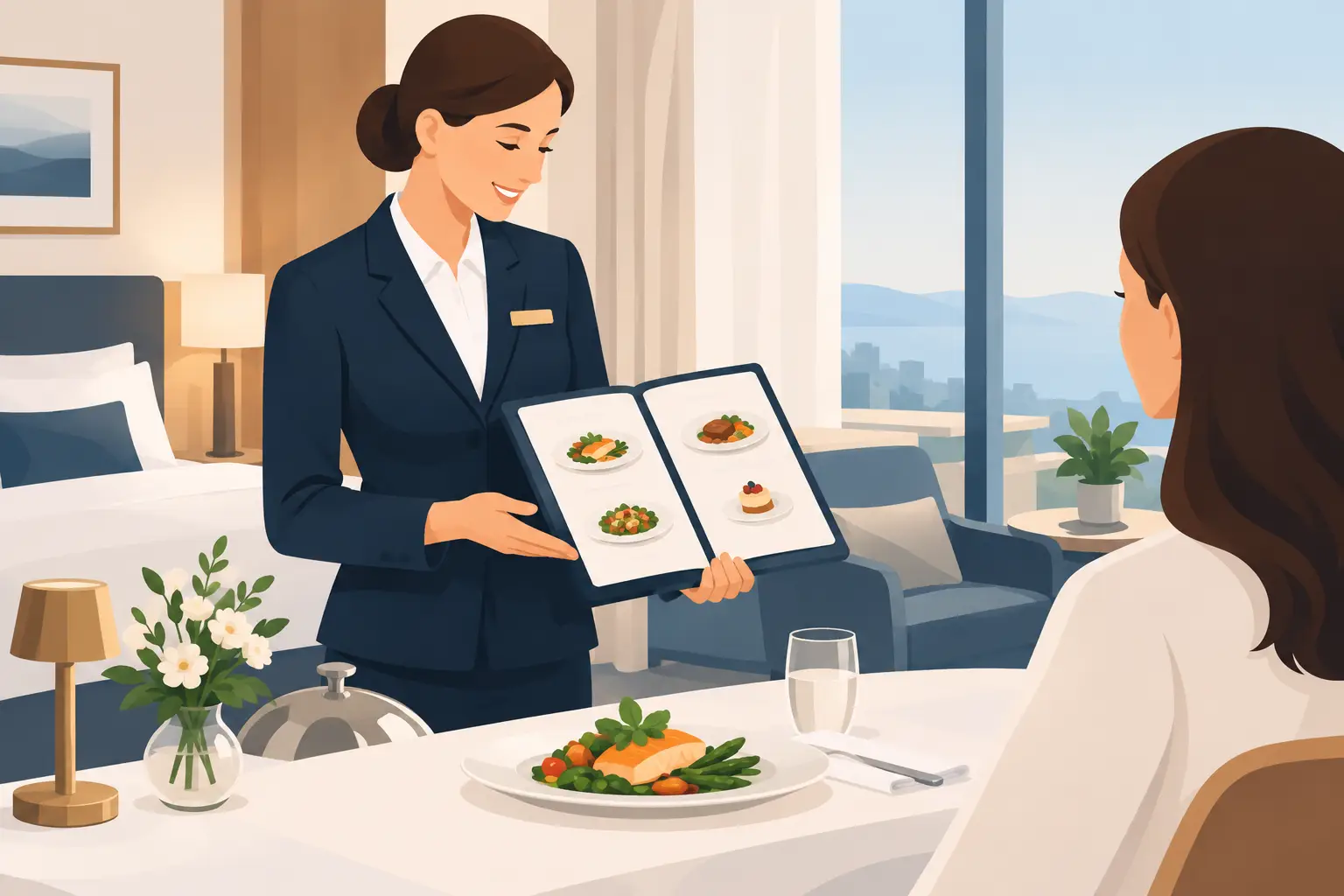
The room service menu requires a different approach than the restaurant menu. Guests need to see availability times, any service charges, and simple options for late-night meals. The offering should be short, clear, and realistically executable by the kitchen at that time.
If the hotel offers ordering via phone or app, the digital menu still plays an important role. It reduces misunderstandings about ingredients and prices, and gives guests enough time to choose without calling reception for every question.
Bar, Pool, and Beach
In these locations, speed is crucial. Guests don't want to wait for a paper menu while sunbathing with their children or sitting with friends. A QR code on the table, sun umbrella, or a discreet sign by the pool provides instant access to cocktails, soft drinks, light meals, and daily promotions.
This is also where seasonal changes are most prominent. The offerings of fresh juices, local wines, ice cream, or cocktails can change in a matter of minutes. The hotel doesn't have to keep an unavailable item just because it's already printed.
Information Guests Truly Seek
Dish name and price are fundamental, but not enough. The description should be short and specific: main ingredients, preparation method, and what makes the dish unique. A phrase like “local specialty” might sound good, but it's more helpful for guests to know if they're getting veal medallions with celery puree or seafood pasta.
Allergens and labels for vegetarian, vegan, or gluten-free dishes should not be a tiny footnote. A growing number of guests choose meals based on this information, and clear labeling reduces additional questions for staff. However, labels must be verified with the kitchen. A wrongly labeled dish is not just a communication oversight, but a serious risk for the guest and the hotel.
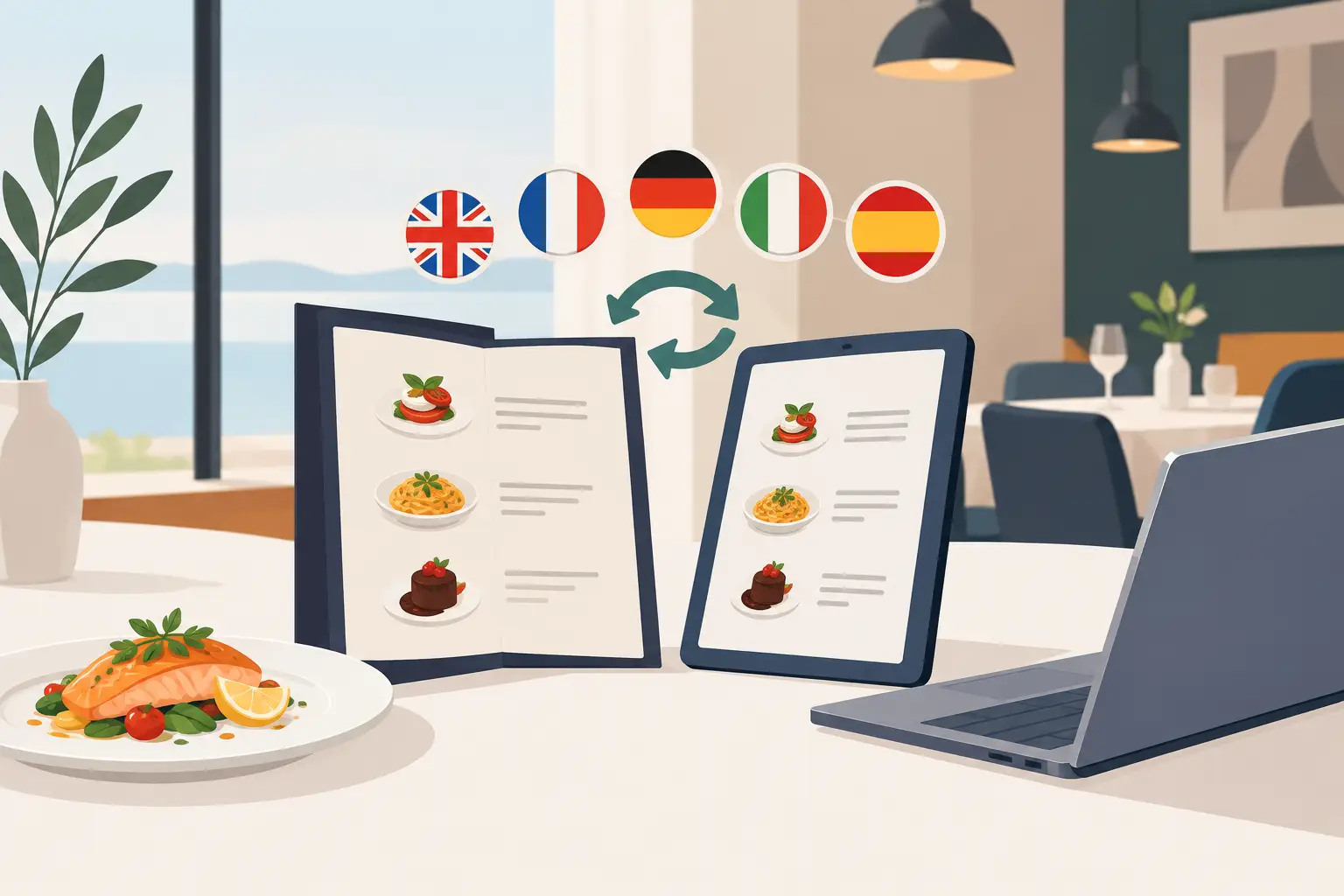
Multilingualism is equally important. Translation should not be literal at all costs. Names of local dishes can remain authentic, but the description must help guests understand what they are ordering. A well-translated menu preserves the local character of the offering while making selection easier.
How to Set Up a Menu Without Overburdening Your Team
Before transitioning to a digital hotel menu, it's useful to first organize your data. You need to standardize item names, prices, descriptions, allergens, and translations. This is a task that requires attention but is done to avoid daily improvisations later on.
Next, you need to determine who in the hotel has the authority to change the offerings. In a smaller establishment, this might be the owner or restaurant manager. In a larger hotel, it's often better to have clear responsibilities: the kitchen confirms availability and ingredients, the F&B manager handles prices and promotions, and marketing checks language and visual presentation.
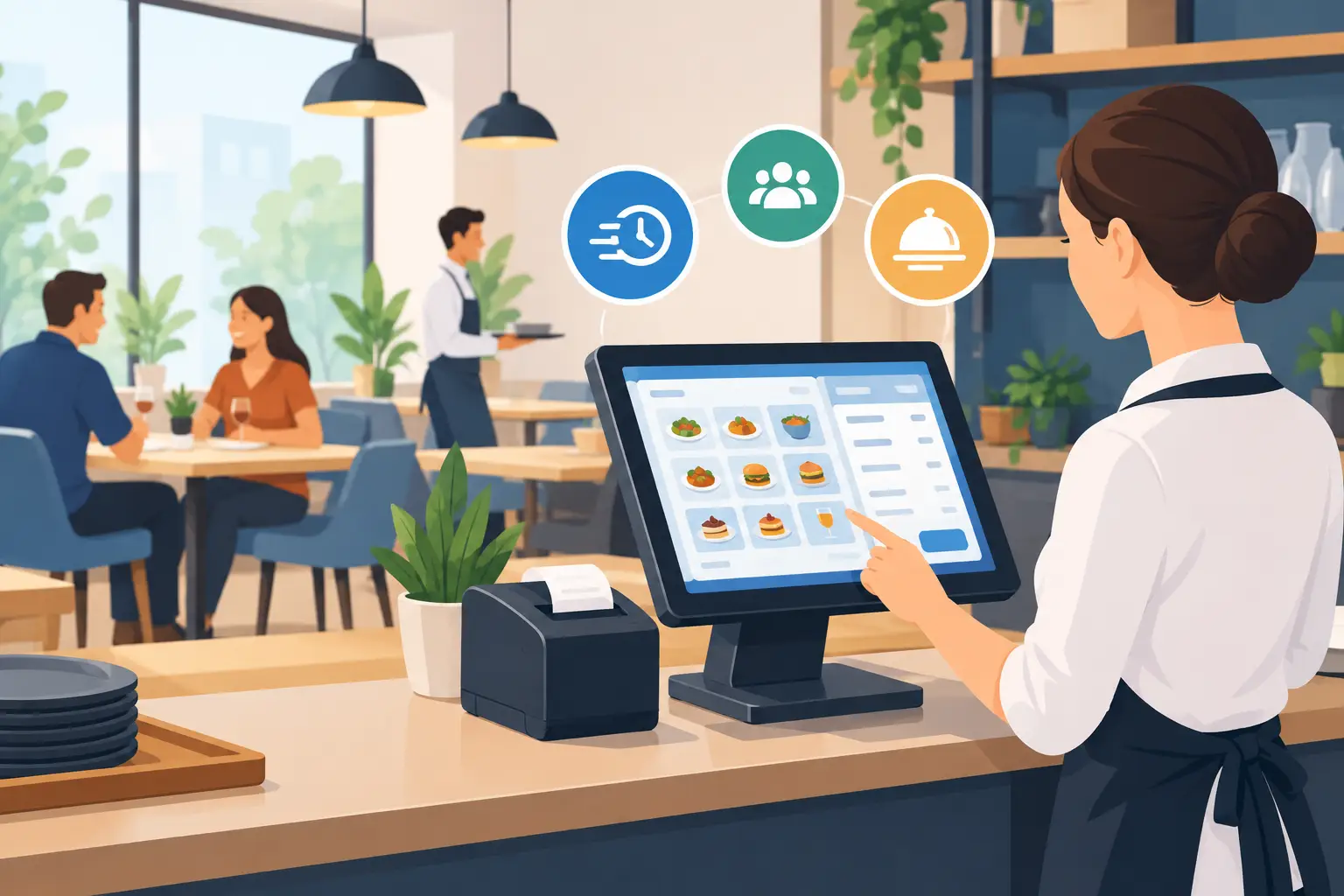
It's important not to turn the menu into a complicated project. The team should be able to hide a sold-out item, change a price, or add a daily special without waiting for technical support. This simplicity is precisely the key value of solutions like menu4.me – a digital menu should follow the hotel's operations, not introduce new administration.
Design That Supports Choice, Not Slows It Down
The mobile screen is where guests most often open the menu. Therefore, tiny text, overly long descriptions, and cluttered categories don't work, no matter how good they look on a computer. The first information must be legible without zooming, and categories clear enough that the desired drink or dish can be reached in a few taps.
The hotel's visual identity should be recognizable through colors, photographs, and communication style. However, function takes precedence. A dark background might look elegant, but if it makes reading prices difficult by the pool in bright sun, it's not a good choice. The same applies to overly decorative category names – guests must immediately understand where to find breakfast, wine, or the children's menu.
The Menu as Part of a Better Hotel Experience
A digital menu doesn't replace the waiter's friendliness or the reception's knowledge. It frees staff from unnecessary repetitions so they can dedicate more time to true service: recommending wine, responding to a specific request, or resolving a guest's problem.
The greatest advantage comes when the information is consistent everywhere – on the table, in the room, by the pool, and on the guest's phone. No differing prices, old drink lists, or awkward situations where a guest finds out an item from the menu no longer exists.
The next time you change a seasonal offer or the price of a single item, observe how much time your team spends communicating that information to every guest. A hotel menu that updates instantly is not just a more modern detail – it's a quieter, faster, and more organized way for a hotel to operate better every day.