Display Allergens on Your Menu Without Mistakes
A guest asking if a dish contains nuts, milk, or gluten isn't asking for an extra service. They're seeking information that can directly affect their health and their decision to order. That's why displaying allergens on the menu isn't fine print at the bottom of the offering, but a crucial part of professional service in a restaurant, café, hotel, or beach bar.
Clear information saves time for both the guest and the staff. The waiter doesn't have to search for answers in the kitchen during busy hours, the chef gets fewer interruptions, and the guest isn't left in the awkward situation of guessing what they can eat. When information is accurate and easily accessible, the menu becomes a more reliable part of the experience you offer.
Why Allergens Deserve a Place Alongside Dish Descriptions
Allergens aren't just a topic for specialized restaurants. Every establishment serving food or beverages has items that may contain ingredients relevant to people with allergies or intolerances. Bread and pastries, sauces, dressings, soups, cakes, pasta, cocktails, and coffee with milk often hide more information than the short dish name suggests.
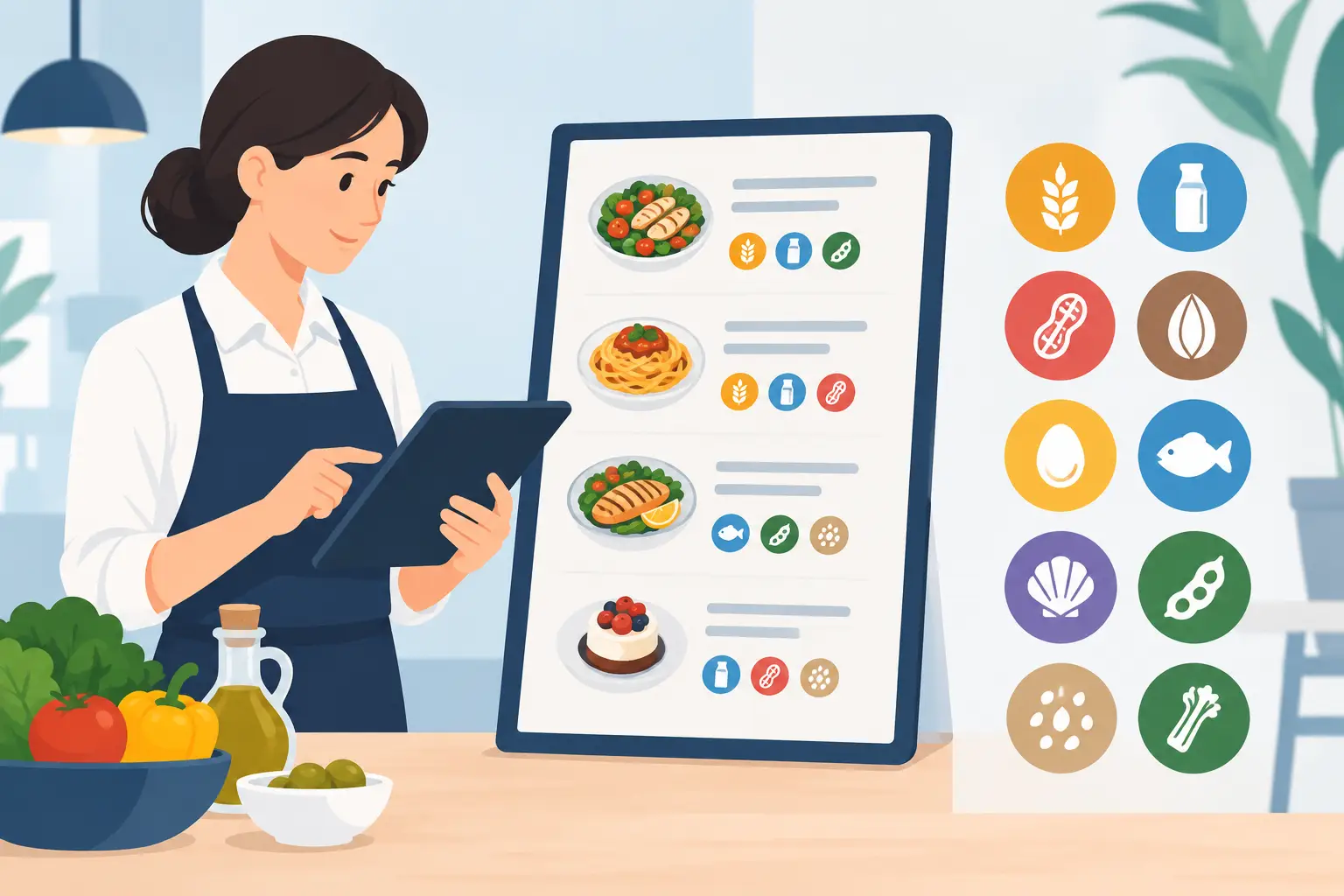
In practice, a group of 14 allergens is most commonly monitored, including cereals containing gluten, eggs, milk, peanuts, nuts, soy, fish, crustaceans, mollusks, sesame, celery, mustard, lupin, and sulfites. It's not enough for a guest to read that pasta is “with cheese sauce.” They need to quickly see if that sauce contains milk, gluten, or other relevant ingredients.
Good allergen tracking also brings business value. It reduces the risk of misinformation, builds guest trust, and shows that the establishment pays attention to details. This is especially important in tourist destinations, where many foreign guests expect clear, recognizable labels and a menu in a language they understand.
How to Organize Allergen Display on Your Menu
The best system is one that guests understand in seconds and your team can easily maintain. The first step is to create an internal specification for each dish: recipe, ingredients, suppliers, and allergens the product contains. This isn't a document you create once and forget. It changes every time you alter a recipe, supplier, finished product, or preparation method.
Next, choose a display method. You can list allergens in words alongside the dish description, use numbers with a clearly visible legend, or combine both approaches. For example, dish names can be accompanied by labels like “gluten, milk, eggs,” while a legend explains the system in more detail for guests who want additional verification.
Numeric labels take up less space and work well on long menus. However, they only make sense if the legend is available on the same page or with a clear tap. If a guest has to scroll through multiple screens to find out what number 7 means, the information isn't practical enough. For shorter offerings, a textual display is often more readable and direct.
Don't Rely Solely on Icons
Icons can speed up orientation, but they shouldn't be the sole source of information. Symbols aren't equally clear to everyone, especially guests from other countries. A label for milk, gluten, or nuts should have textual confirmation, ideally in the languages your menu offers.
Also, avoid vague formulations like “may contain anything” or “ask staff.” Staff should be ready to help, but the menu must provide basic and verified information. Clearly label what the dish contains, and leave additional questions for specific guest needs.
The Difference Between an Ingredient and Potential Cross-Contamination
One of the most important nuances is the distinction between an allergen that is an ingredient in a dish and potential cross-contact during storage or preparation. If a cream soup contains sour cream, milk is a direct ingredient. If a gluten-free dessert is prepared on the same work surface where flour is handled, the risk may be of a different nature.
There's no universal formula here. It depends on kitchen organization, equipment, work procedures, and the actual possibility of separating preparation. A restaurant should not lightly declare a dish completely safe for a person with a severe allergy if it cannot control that process.
That's why communication between the front-of-house and kitchen, separate utensils where needed, and realistically set expectations are more important than an attractive “free from” label. If you offer a gluten-free, dairy-free, or nut-free dish, check that this claim corresponds to the entire journey of the ingredient – from receiving goods to serving.
Digital Menus Facilitate Information Accuracy
Printed menus quickly become a problem when you change your pesto sauce supplier, introduce a new dessert, or adjust a recipe. Allergens are often updated last, as every change means new print preparation. This is precisely where a digital menu offers a clear operational advantage.
When dishes, descriptions, and allergen labels are in one place, you can publish changes immediately. If a certain ingredient is currently unavailable or you're replacing it with another, the information can reflect the change the same day. This is especially useful for seasonal restaurants, hotels with frequent menu changes, and venues that work with variable daily menus.
A platform like menu4.me allows you to display relevant information for each menu item on the guest's mobile device, without waiting for a new print run. A QR menu doesn't solve the problem on its own – the content still needs to be accurately entered – but it significantly makes it easier to keep it current.
Multiple Languages Without Duplicating Errors
If you work with local and international guests, allergens should be displayed consistently across all language versions. Don't just translate the dish name. Translate the labels, legend, and brief explanations so guests clearly understand what they see.
The safest approach is to first establish an accurate basic dataset of ingredients, then translate it. When a recipe changes, the change must be visible in every language version. Different labels on Serbian and English menus are not just a bad impression – they can cause serious confusion.
Implement a Simple Verification Process
Accuracy doesn't arise because someone carefully entered data once. It depends on routine. Designate one person responsible for menu updates, but include the kitchen, procurement, and front-of-house in the information flow. The head chef should confirm recipes, procurement should report product changes, and staff should know where to find current data.
It's useful to conduct a quick check before each major season, menu change, or introduction of new dishes. Compare the digital menu with recipes and supplier declarations. Pay special attention to marinades, pre-made sauces, spice blends, base soups, and dessert decorations – it's often in such details that allergens appear which are not obvious from the dish name.
You don't need a complicated system to be precise. Clear records, a responsible person, and a rule that no recipe change goes to sale before the menu display is checked are sufficient. When a guest asks a question, the best answer isn't “I don't think it has any,” but information your team can trust.
Guests won't just remember the taste of the meal. They'll also remember how easily they could make a safe decision. So, make allergen information visible, up-to-date, and easy to understand – just like the good service you want your establishment to provide.